Cantankerous drivers, moribund managers and spineless politicians are all to blame for the crapification of the TTC. The case for privatizing public transit—an oxymoronic idea whose time has come

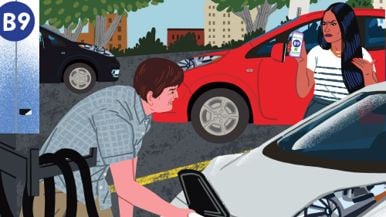
Fever pitch: tensions between drivers and riders have reached epic proportions (Photo-illustration by Gluekit, photo by Felix Poon)
Say what you will about Adam Giambrone’s youth and inexperience: before his career collapsed in a haze of G-rated text messages, the baby-faced boy wonder—who presided over one of the most unaccountable, out-of-control and inept periods in the TTC’s once proud history—had already mastered the art of civic politics, Miller style. Barely into his 30s, he was wise enough to know that nobody gets ahead at city hall by pushing for serious change.


When the TTC’s 9,000 unionized workers went on strike in 2008 (for the second time in two years), Giambrone quickly stamped out questions of whether riders would be better served by private operators. Aside from London, England, he said, “There are no major centres that run privatized operations—there’s a reason.” In fact, there are dozens of big cities with privately operated public transit, and in many cases those systems work far better than the TTC.
Then, last fall, when the TTC announced an 11 per cent fare hike and imposed its infuriating one-token limit, Giambrone limply said that he understood why riders might be frustrated. He even blew off criticism after phase three of the new St. Clair streetcar line launched this past December—two years late, more than double the initial $48‑million estimate and, if its first months of operation are any indication, just as tragicomically ill-managed and undependable as the old-school system. Giambrone applauded the TTC, saying that, while the system would always have its critics, managers there had taken “bold action” in recent years.
Yet by early February, as passenger complaints hit record highs and images of snoring ticket takers, empty fare booths and epically surly drivers went viral, not even Chairman Himbo could brush aside the Better Way’s woes. So he assembled a panel. Translation: he wouldn’t really change a thing.
We should be thankful for the sex scandal, if you can call it that, and what can only be the beginning of the end of Giambrone and (his mentor) David Miller’s reign over the TTC. While they clearly love public transit, neither man has ever been interested in fixing what actually ails Toronto’s system. (Miller recently, all too obliviously, called the TTC “one of the greatest success stories in this country.”)
The city needs somebody who’s willing to restore the agency’s focus on the riders it long ago forgot how to serve. It should start by replacing the TTC board with qualified leaders and axing at least a third of management. And then if they want an efficient, modern transportation system, they’ll contract out its operations to private bidders, or sell it off, piece by underperforming piece, to transit companies that have a clue.


Hey – I respect your opinion. I think the TTC is a great service, it’s just over-priced, even with the subsidies, and the people “working” there are on a “golden ticket.”
They are not held accountable, and to be clear, if you make 60k – you take home way more than 37k a year… and please note – the 60k figure was just after 2 years of service!! Top university grads don’t make that kind of money in their first years out of school – and they’re paying off student debt!! I can only imagi-i-i-i-ne how much these guys are making,that have been there for 10 or 20 years… I don’t want to imagine, I want a journalist to step up and find out!
Yes, I guarantee they have cottages just north of Muskoka and laugh amongst themselves about the ransom they hold this city to, all the time…
It isn’t just the drivers, it’s management as well… The good years created bloated salaries and set the bar at an unrealistic height for thick and thin times. No Mayor ever wants to stand up in the slightest to these guys, because as you said – everybody knows somebody working there.. and everybody has the potential to vote…
The article is good because it recognizes the serious issues faced by the TTC, including public perception and its bloated salaries. Unfortunately, sometimes you need to blow something up to change its parts.
March 23, 2010 at 10:52 am | by jayOh Jay, for the record, I don’t even know one person working for the TTC -so I’m not speaking as a person related to someone working at the TTC -as you suggested we all are who disagree with you. Are you so close minded that you think only people related to TTC workers would want to keep the system from being privatized. Also, while I make $30,000 a year in the non-profit sector of Toronto – I wouldn’t want any position at the TTC for any amount of money. I’m thankful there are people out there who are willing to that work -which from what I see every day riding the TTC – can be challenging from many aspects. They deserve ever penny they get. The government needs to step up and help fund public transportation.
April 4, 2010 at 12:45 pm | by RayThat’s great. Now can you cite an example of a PPP transit system that doesn’t operate with a MASSIVE (profit) subsidy (since public transit, by nature, bleeds money)?
April 5, 2010 at 9:25 pm | by joe bestStockholm (being your success story) with double the subsidy for a population half the size with a city with a much more intensified, compact footprint?
We can do better by electing better politicians and by being more active in our communities, not by privatizing essential public services.
Are you aware that there are actually other cities in Ontario, some of which even aspire to build transit systems, if on a much more modest scale than Toronto’s?
Perhaps if Toronto were willing to build alliances with those cities, like Ottawa, London, Hamilton, KW, etc., instead of trying to monopolize every drop of transit cash (what little there is) at Queen’s Park, all of Ontario’s major urban areas would benefit.
Until then, cry me a river. As an Ottawa taxpayer I’m sick of sending Ontario taxes to GTA transit capital works, when Dalton McGuinty is still nickel-and-diming his hometown.
April 10, 2010 at 1:07 am | by Davere: Joe Best. That’s great. Now can you cite an example of a PPP transit system that doesn’t operate with a MASSIVE (profit) subsidy (since public transit, by nature, bleeds money)?
http://www.mtr.com.hk/eng/investrelation/financialinfo.php
The Hong Kong Mass Transit Railway system was privatized in 2000 and taken public on the Hong Kong Stock Exchange. All subsidizes were removed upon privatization. It has been profitable for the last ten years. Revenues rose from $4 billion HKD (about $500 million USD) in 2000 to $8 billion HKD ($1 billion USD) last year. See their financial report above.
The corporation now owns subsidiaries across Europe and China, building subways and consulting on passenger rail projects for foreign countries.
Please do some research before making uninformed and ignorant comments. Privatization can work.
The other thing if you look at the MTR’s financials is that wages account for only 30% of expenses. For the TTC wages account for 75% (from their annual report on http://www.ttc.ca). I recommend everyone look at the TTC annual report and check out the financial statements – subsidies per-passenger has actually be rising every year, but it is not enough to cover rapidly rising labour expenses. That is the core of the problem.
April 23, 2010 at 12:53 am | by Ken