Real Estate News
Food & Drink
City News
Deep Dives
Culture
Style
Newsletters
Membership
Submit a Tip
Subscribe
Sign in
Portuguese
Food & Drink
A visit to this new Portuguese restaurant is like a trip to Lisbon without leaving Toronto
Taberna LX is now open in the old Paris Paris space
Advertisement
Food & Drink
What’s on the menu at Cafe Belém, a new Portuguese café, bakery and bottle shop in Kensington Market
Including custard tarts, of course
City News
A new mixed-raced generation is transforming the city: Will Toronto be the world’s first post-racial metropolis?
I used to be the only biracial kid in the room. Now, my exponentially expanding cohort promises a future where everyone is...
Food & Drink
Introducing: Dyne, the Iberian-Asian restaurant that took over from Maléna
Last weekend, Richard Andino, a chef with 22 years experience in Toronto’s restaurant scene, opened Dyne in Maléna’ s old...
Advertisement
Food & Drink
Introducing: Archive, a casual new wine bar on Dundas West
Unlike the tony wine bars of yore, which targeted the suits-and-heels crowd, Archive, which opened last month, is situated on the...
Food & Drink
Nine wines to build an unbeatable cellar, chosen by our critic David Lawrason
I recently spent an evening with my cousin pouring over-the-hill wine down the sink, about 10 bottles in all. We tasted each one...
Food & Drink
Introducing: Quinta, a fresh new Dundas West Portuguese restaurant on the site of an old one
The latest new opening on the ever-churning Dundas West strip: Quinta, which launched last week in the space formerly occupied by...
Advertisement
Food & Drink
Weekly Eater: Toronto food events for July 2 to July 8
Monday, July 2 Tuesday, July 3 Wednesday, July 4 Thursday, July 5 Friday, July 6 Saturday, July 7 Sunday, July 8 Farmers’...
Style
Great Spaces: A Toronto screenwriting couple steals a home renovation idea from their own show
Karen Troubetzkoy and Derek Schreyer met at film school in Vancouver more than 15 years ago and have been romantically and...
City News
Why educational apartheid is not the answer to curbing dropout rates for specific racial and ethnic groups
The tall black man was angry. “I want to propose 10 seconds of silence in memory of Brother Dudley Laws,” he said into the...
Advertisement
Food & Drink
Introducing: Inigo, a Queen West churrasqueira, takes over Igor Kenk’s old space
While Dundas West is in the midst of a carnivorous craze with a serious emphasis on the pig (we’re looking at you, Porchetta and...
Food & Drink
Weekly Lunch Pick: grilled octopus that almost convinced us it isn’t January
A trip to Elm Street's Adega is the perfect way to remain in denial that spring is still months away. The Portuguese...
Advertisement
Summer Camp Guide
City News
Summer Camp Directory 2026
Discover our top-rated summer camps for kids of all ages
Best New Restaurants
TL Events
Toronto Life
’s Best Restaurants returns for its 10th-anniversary edition on June 8
General admission tickets are now on sale for Toronto’s biggest culinary night, featuring top chefs, restaurants and drinks
Big Stories
Deep Dives
Dead Reckoning: The executor of their estate was supposed to divide it among their friends and family. Instead, he bankrupted it
When Sami and June Suomalainen died, it fell to the executor of their wills, a lawyer they hardly knew, to sell their million-dollar midtown home and split the proceeds among their inheritors. Seven years and six lawsuits later, the beneficiaries haven’t seen a cent
Deep Dives
These are Toronto’s best new restaurants of 2026
This year’s list includes a 150-square-foot omakase counter, a Parisian brasserie in the Annex, Korean comfort food, Filipino karaoke and a Summerhill seafood spot that’s reinventing the raw bar
Deep Dives
Hoop Dreams: Inside the making of the Toronto Tempo, the city’s newly assembled WNBA team
After years of false starts, months of nail-biting negotiations between the league and the players’ union, and an 11th-hour scramble to build a roster, Toronto finally has its own major-league women’s basketball team. Now it just has to live up to the hype
Deep Dives
Live From New York: Inside the slay-or-be-slayed world of Studio 8H with
SNL
rookie Veronika Slowikowska
Slowikowska is the first Canadian to join the cast of
Saturday Night Live
in more than 25 years. She’s also this season’s breakout star. Now all she has to do is keep crushing it
Deep Dives
Better Call Deepak: Meet drug lord Ryan Wedding’s self-styled cocaine lawyer
The man who represented the infamous drug lord is unapologetically flashy—he has a Lamborghini and two Maseratis and wears $1,200 Louboutins. But did he become an accomplice to his client’s crimes? Deepak Paradkar says he was just doing his job. The FBI says he crossed a line
Deep Dives
The Redemption Tour: The Blue Jays are back. Can they finish what they started?
We’re not over it, but they are. Six months after that devastating defeat, the Jays take the field once more, bent more than ever on winning the World Series. Dispatches from the dugout
Deep Dives
My Life as a True Crime Spectacle: My father’s crimes fractured our family. Then came the press
My dad was the infamous Rolex Killer. The news of his crimes nearly broke me. And ever since, my family has been hounded by reporters, podcasters and true crime fanatics—a whole new circle of hell
Deep Dives
Robby on the Line: Out and about with Robby Hoffman, comedy’s equal opportunity assassin
Larry David is the indisputable king of brutal honesty. But if anyone comes close, it’s Robby Hoffman, the suddenly everywhere comic from whom no group is safe
Deep Dives
Notes on an Academic Scandal: Why did TMU demote a leading advocate of DEI?
Pamela Sugiman, a former arts dean at Toronto Metropolitan University, was a key player in the school’s push for diversity, equity and inclusion. When the backlash against DEI arrived, she was demoted. The school says it was a coincidence. She disagrees
Deep Dives
City of Renters: The dream of home ownership isn’t dead. Maybe it should be?
Scenes from the rent-for-life revolution
Deep Dives
This generation was pummelled by Covid high school. Now the job market wants to replace them with AI
It’s hard out here for a 20-something
Deep Dives
The High Price of Hope: Inside Toronto’s white-hot fertility market
Desperate wannabe parents are betting their life savings on unproven treatments and false promises
Deep Dives
Man vs. Machine: ChatGPT caused him to spiral into delusion. Now he’s suing OpenAI
Last spring, a chatbot convinced Allan Brooks that he had discovered a revolutionary mathematical theory. He says it nearly destroyed him
Deep Dives
Smart City: 20 mind-blowing Toronto inventions that are changing the world
Homegrown innovations that will transform lives for the better
Deep Dives
293 Days Without My Son: I gave up everything to rescue my kidnapped child from my abusive husband
When Valentino was abducted, I knew three things: he’d been taken by his father, he was somewhere in India and I would not rest until I found him
Deep Dives
The Violent Life of a Tow Truck Driver: How an unremarkable profession turned Toronto into a war zone
The towing industry has been hijacked by criminals and kingpins who fleece customers, beat up dissenters and shoot their enemies. Inside the brutal turf war for the city’s wrecks
Deep Dives
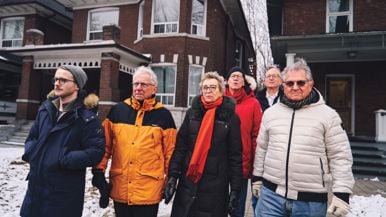
Street Fight: Inside the battle raging over Toronto multiplexes
If this city stands any chance of solving the housing crisis, it will need buildings with multiple units in residential neighbourhoods—a move that has many residents saying, “Anywhere but here!”
Just Listed
Just Listed
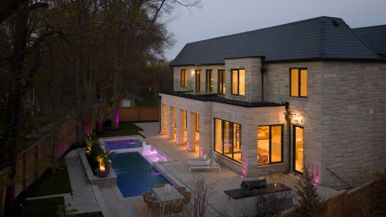
For Sale: 92 Arjay Crescent
As luxury buyers become increasingly focused on wellness, privacy, and long-term livability, a new generation of custom homes is emerging – one defined less by excess and more by thoughtful design
Just Listed
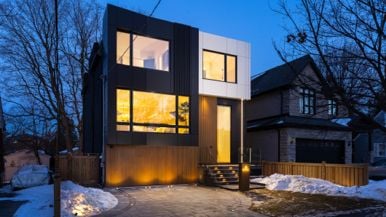
For Sale: 171 Durant Ave
This rare property features 2 houses on 1 lot
Just Listed
For Sale: 50 First Avenue
A testament to time presiding over one of Uxbridge's most storied streetscapes, this magnificently preserved circa 1880 residence commands its prominent corner lot with the quiet confidence of a true architectural landmark
Just Listed
For Sale: 7 Bentley Drive
A commanding architectural statement in prestigious Stonegate–Queensway, this newly completed custom residence by Bali Homes Group presents a refined interpretation of contemporary luxury living
Just Listed
For Sale: 75 Queen Street
Guelph is having a moment