The most taboo question in Toronto’s Caribbean and African communities is why half of black fathers refuse to help raise their kids. One father, the son of an absent dad himself, has a simple solution

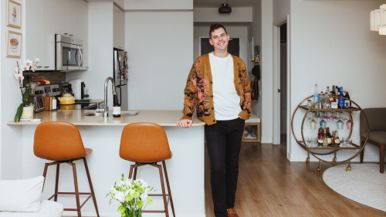
From left: Kwasi Peasah, Brandon Hay and Marlon Osei-Tutu.
Last year, a group of gangbangers got together at a community centre at Jane and Finch to talk about what it’s like to be a dad. They ranged in age from 15 to 24, and some had already served time in jail more than once. Because these young men belonged to different gangs, the location of the meeting was chosen carefully to be on neutral ground.

Each of the participants had been cajoled to attend by a parole officer, a case manager or a gang prevention worker, and each received $20 for making it in the door. At first, they were skeptical, their jaws set, reluctant to speak at all. Brandon Hay, the group’s 32-year-old facilitator, introduced himself by revealing his own background, that he’s a father too, of three boys, and that it’s the hardest job he’s ever had. Hay is tall and balding and heavy-set, with lion cubs inked down one arm. His smile is magnetic and his eyes serene behind octagonal glasses. He told a story about his first extended outing alone with his eldest son, Tristan, then less than a year old. On the way home, Tristan began to scream and cry in the back seat, and Hay couldn’t console him. He frantically pulled off the highway into a gas station, drenched in sweat, and called his girlfriend to ask what he should do. The next time his son threw a fit, he was better prepared. The point was: you just have to keep trying. Hay invited the others to tell their own stories, which they did one by one, and suddenly there was a nearly imperceptible shift whereby Hay was no longer in the conversation and the guys were talking among themselves.
One man, a soft-spoken 24-year-old who grew up in the Driftwood Court housing project, talked about serving four years in Kingston’s federal penitentiary for armed robbery and drug trafficking. While there, he spent time in solitary confinement, away from the other 400-plus inmates, and meditated on his mistakes. When he started his sentence, his daughter was only a few months old. As the days ticked by, he thought about how much of her early life he was missing. Now that he’s free, he’s turning his life around; he’s back in school studying at George Brown, and he’s won custody of his daughter on weekends.
Hay nodded his head and surveyed the room. The evening was an experiment, and it was going better than he had expected. Hay is a director of a support group called the Black Daddies Club. Since he founded the BDC in 2007, he had been trying various methods of getting black men together to talk about their experiences as fathers, and to encourage them to be better parents. Gang members were an especially difficult group to crack. Hay holds sessions across the city—in barbershops, community centres and borrowed offices—with black fathers from all backgrounds. He lists upcoming dates on the BDC’s website, on a Facebook page and in the African- and Caribbean-Canadian magazine Sway. Sometimes as few as five men show up; sometimes as many as 25. Every session is casual and unpredictable, and the goal is a kind of group therapy.
Hay was raised by a single mom, and when he became a dad at 23 he noticed how many people assumed he would walk away from raising his own kids. Then he noticed that other black fathers in his community had low expectations of themselves, too. So he decided to tackle the apathy, a few dads at a time. Hay believes that making these men care about fatherhood will also help them off the criminal path and keep their kids from repeating the cycle. It’s a lofty goal. And it’s bigger than one man can handle.


Tags
Africentric School, Barack Obama, Basketball, Brandon Hay, children, civil rights, family, Father’s Day, Toronto