The Trader’s Revenge
David Berry was making $15 million a year when Scotia Capital fired him. Some say the CEOs were jealous of his earnings. Others say he was a renegade trader. Now he’s spending millions on a wrongful dismissal suit. The stakes? Bay Street’s biggest payoff
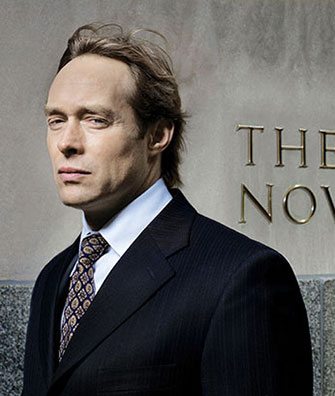
When David Berry arrived on the trading floor in 1996, he was 30 years old and pretty much broke. He’d racked up $17,000 in student loans and was on the hook for another few thousand in credit card debt. He even had a collections agency stalker after him.
The first threatening phone call came a few days into his job as a trading associate on Scotia Capital’s Preferred Share Desk. If Berry didn’t get his debt paid up pronto, the collections guy promised, he was going to humiliate him by calling every Rolex-wearing hot shot in Berry’s department until he had a cheque in his hands. It never came to that: Berry’s first bonus was just enough to cover the loan.
Debt would soon be a distant memory. Within two years, he would wheel and deal his way to ruling Scotia Capital’s Preferred Desk and from his throne eventually control 62 per cent of the preferred share market in Canada. “Berry’s trajectory is almost unheard of,” says one of Bay Street’s senior players. “It’s like he went from Model T to rocket in a year or two.”
He was the only institutional trader at Scotia Capital who had a direct-drive deal (also known on The Street as “eat what you kill”), meaning he kept a percentage of the profits he generated. In 2002, Berry claims he netted Scotia $75 million in profits and personally took home $15 million. His desk produced 40 per cent of Scotia Capital’s institutional equity profits, which itself amounted to a significant portion of the entire bank’s net profits. Berry’s 40 per cent was solely manufactured by him and his even-younger assistant, Marc McQuillen.
It’s widely believed that David Berry was Bay Street’s top earner at the time. David Wilson, then vice-chairman of the Bank of Nova Scotia, and chairman and CEO of Scotia Capital, earned just under $7 million that same year. In 2004, Berry had an off-year, earning only $9.5 million, but it was still more than triple what Rick Waugh, president and CEO of the Bank of Nova Scotia, made in salary and bonus. He was raking in enough to snap up one of Rosedale’s most desirable and historic properties and to procure himself the requisite plaything for any young Bay Street multimillionaire: a Ferrari.
Which is why it was front-page news when Scotia fired Berry on June 30, 2005. The bank alleges that he engaged in inappropriate trading practices—most significantly, that Berry sold some newly issued preferred shares to clients without printing the trades on the stock exchange. Yet the majority of the power brokers contacted for this story (most of whom would speak only on the condition of anonymity) believe the allegations were an elaborate excuse to get rid of Berry. The real reason he was fired, they say, was because he was making a lot more money than Scotia’s top executives (or the top executives at any Canadian bank, for that matter).
“This was all about ego,” speculates one former Scotia manager. “Would Rick Waugh blow a gasket because of how much money Dave was taking home? Some people who know Scotia and understand the culture of Bay Street would say yes.”
In November 2006, Berry launched a $100-million-plus wrongful dismissal suit, which could unfold in court this fall. Though no one from Scotia would speak on the record for this story, sources there say the bank is prepared to use any and all available resources to defend itself, including Torys’ Sheila Block, widely considered Toronto’s top litigator.
At a time when people view the banks’ string of record profits with weary suspicion, Berry’s suit positions him as something of a David to Scotia’s Goliath. The irony is that this unlikely David is the bank’s own creation.
Berry didn’t really understand the intricacies of the preferred share market when he started his job, but his employers figured he was bright and aggressive enough to pick it up quickly. To make sure, he was assigned to work under a senior trader, Tim Hale, who’d been running the Preferred Desk at Scotia since the early 1990s. The desk was then seen as a relatively sleepy corner of the trading floor, but it didn’t take long for Berry to see avenues of untapped potential.
Preferred shares are similar to bonds, except that they pay dividends instead of interest. And while they can be traded like common shares, they get paid out before common shares in the event that the issuing company files for bankruptcy—thus the term “preferred.” However, this elevated status isn’t usually what investors consider their most attractive asset. The real reason those in the preferred market are drawn to it has to do with tax advantages.

During Berry’s early trading days, he was practically at the bottom of the trading floor food chain. He remembers getting an order that was more related to equities than preferred shares, and standing up and yelling across the floor to Scotia’s then head trader. In response, the head trader simply put up his hand and wouldn’t even make eye contact. The following year, in 1997, once Berry had started to trade with a platoon of fresh institutional clients, the head trader walked over to Berry’s desk to ask where he was getting all of the new business. “That was sort of a turning point in terms of respect,” says Berry. “It was a far cry from ‘Go get my coffee, bitch.’ ”
Berry’s success was such that he had gradually—if unofficially—become Hale’s boss. In late 1998, after Berry had spent less than two years on the Preferred Desk, Scotia cut Tim Hale loose.
Berry’s reputation among his peers and clients was that of a congenial, soft-spoken, good-humoured guy with one hell of a competitive streak. Very few others had his intelligence, drive and aggression, says one former colleague.
Being good with people gave Berry an undeniable edge in the market. Many of his clients worked for mutual funds and such big insurance companies as Altamira, Manulife Financial and Canada Life. Like Berry, they were young and getting started in their careers, and he went out of his way to make sure they became his friends. He didn’t just send clients the usual tickets to Leafs games or the symphony—he went to their weddings and even vacationed with a few of them.
“A lot of young new portfolio managers were just starting up at that time,” Berry told me during an interview at his Rosedale home. “And I caught that little wave. I was pretty good with the older guys, too. My clients felt they could talk to me, and I wouldn’t fuck them.”
Berry’s success often translated into promotions for his young clients. “Dave was a hard-working guy,” says one of them. “He busted his ass on the phones. He wasn’t brash and didn’t stick the fact that he was making a lot of money in my face. It might sound strange to hear this, but I liked him because he didn’t get greedy on trades. I really trusted him—I still do.”
Berry became a coveted player. In 1999, Merrill Lynch offered him over $1 million to leave Scotia Capital. To keep Berry on board, Scotia offered him the direct-drive deal, initially with a 10 per cent take of his net revenues. Direct drive is common among most retail brokers on The Street, but Berry’s boss, Jim Mountain, then Scotia Capital’s head of institutional equity, made it clear that Berry would be the only person on the institutional side of the company with such an arrangement. As a result, Berry made almost $1.5 million that year.
It might have seemed like an astute move on Scotia’s part, except that, later that same year, RBC Dominion Securities also offered Berry a job, saying it would raise his direct-drive arrangement to 30 per cent. Scotia countered with 20 per cent, and Berry decided to stay. He made approximately $5.5 million in 2000 and almost doubled his earnings to $9.2 million the following year. In 2002, Scotia, perhaps getting nervous, capped his income at $15 million for the following year. Berry made the most of it, pulling in another $15 million.
On the trading floor he was afforded star status, and with it came certain privileges, such as showing up for work at 9 a.m., hours after most other traders. He skipped the evening update meetings. No one said anything about his lunch-hour squash games. And if he needed help with a trade, he got it—and quickly. “I had the best job in the world,” he says. “I came and went when I wanted. I was my own boss. No one infringed on my territory. What I said went. I ruled the industry. It was good for everybody.”
At one holiday season party, there was a slide show that featured different trading floor characters followed by a humorous quiz of what they deserved for Christmas. One slide read, “What does Dave Berry get?” The answer? “Whatever he wants!”
If that was true then, it certainly stopped in January 2005, when Berry traditionally negotiated his annual compensation contract. Mountain sat him down to explain that the contents of Scotia’s new proposal, outlined in a letter, were going to be a little different. First, Berry’s earnings would from that point on be capped at $10 million. Second, the letter contained a clause that made Berry responsible for covering any of his trading losses.
Berry told Mountain that neither change was acceptable. Mountain’s response, according to Berry, was that those were the terms that Scotia’s board of directors could stomach that year. “Oh, one other thing,” Mountain said. “This will be the last year of your direct-drive deal.” Berry would be paid like most other traders, with an annual bonus that would be at the bank’s discretion.
Signing the contract would mean giving Scotia the right to terminate Berry for any regulatory breaches or trading losses. He would also have to waive his ability to sue for wrongful or constructive dismissal. Berry sat on the offer until Mountain pressured him to sign.
He responded with a list of objections to Scotia’s proposal. His main point: he deserved to retain his direct-drive deal. He concedes his letter was “harsh” and he knew that a battle of some kind was likely brewing; he just didn’t know how it would play out. As Berry sent his e-mail to Mountain, he turned to his assistant, Marc McQuillen, and said, “This is going to make some bells and whistles go off.”

While Bay Street has a reputation as the walled-in territory of the WASP elite, there is no shortage of suburban-bred traders who climbed up through smarts, testosterone, gall and greed. David Berry’s childhood was spent on a farm in Milton, where his father, a World War II naval commander, had retired to raise his family. With considerable financial aid, Berry attended high school at Trinity College School, a private boarding school for boys in Port Hope. From there, he went on to Queen’s University, where he began studying math but decided he wanted to work in business.
After spending a year at Colliers International, the commercial real estate outfit, Berry discovered that the accounting firm Ernst & Young would pay MBA tuition if he committed to working for them for two and a half years and completed a chartered accounting licence. He applied immediately. “I knew then, in the early 1990s, that the market was awful,” says Berry. “So when I went back to school, I thought, In four or five years, I’ll be coming into the market, this recession will have turned, and I’ll catch this freight train with an MBA and a CA. And I called it pretty well.”
Berry met his wife, Fiona Winter, in 1991, during the first year of his MBA at U of T. Winter, a petite brunette, had an identical twin sister who was dating a player on Berry’s rugby team. She’d just finished her undergraduate studies when the introduction was made, and soon they were living together, with Winter working as a legal assistant (she’d contemplated law school before children entered the picture) to cover their rent and expenses.
He loathed his work at Ernst & Young, and with the help of one of his father’s squash pals, Gordon Cheesbrough, then the chairman of Scotia Capital Markets, he landed a research associate job with the bank in 1995. Berry proposed to Winter the night he received Scotia’s offer.
The couple made the surreal transition from student poverty to almost unimaginable riches in just a few short years. In 1998, Berry bought a black Porsche 911. He and Winter moved from a rented loft on the outskirts of Regent Park to a four-bedroom house in Forest Hill. As their brood expanded—the Berrys now have two girls and a boy, aged five to eight—they began looking for something a little bigger.
For a few years, Berry had his eye on a property at the north end of Park Road, one of the most prized in Rosedale. The six-bedroom, 12,000-square-foot Georgian-style home had at one time been known as Caverhill. In its more recent past, it was owned by the Thomson family, who’d let it sit dormant for the better part of a decade, until an asset manager named Robert Bourgeois bought it. Bourgeois gave the house a multimillion-dollar facelift, then decided to sell. He listed the house for $7.8 million in 2000. Berry, who says he’d not yet forgotten the days when he and Winter had to stretch each dollar, patiently waited him out.
Two years later, Bourgeois finally accepted Berry’s offer of $5.46 million. Their new neighbours would come to include Eric Lindros, Mark and Suzanne Cohon, and Robert Colson, Berry’s lawyer for his wrongful dismissal suit. In the house’s L-shaped garage he parks the family car, a BMW X5, along with his Porsche’s successor, a Ferrari 612 Scaglietti. The family’s art collection includes an imposing Dutch painting from the 1800s that Berry picked up from Bourgeois with the house. Berry installed a theatre-sized movie screen in his massive den that emerges from the wood-panelled ceiling at the push of a button. In the lot’s ravine, he built a hockey rink for the kids, the ice kept frozen by Freon tubes.
“Just last year, I had someone knock on our door and put in an offer to buy the place for $15 million,” Berry says. “Steve Stavro and Gerry Schwartz might have spent that kind of money on their places, but I didn’t.”
After sending his rejection letter to Mountain, Berry began to realize that his superstar status on the trading floor had all but disappeared. The prime example of this was how, about a week later, he was questioned by Cecilia Williams, the head of Scotia Capital’s compliance department. Among other responsibilities, the arm’s length group is charged with ensuring that its traders abide by the Universal Market Integrity Rules (UMIR). Williams asked Berry about a trade in which he had bought some shares in the Falconbridge mining company from a client and, in turn, sold the same client shares in Great West Life. She wanted to know why he’d sold the stock to the client at a price that was about a dollar more than the closing price the day before.
What made the trade appear unusual was that Berry was both the buyer and the seller of the stock. “I might tell a client, ‘Yeah, I think I’ve got a guy who can buy your shares,’ ” explains Berry. “But, in the end, if I can’t find a guy I do the trade myself. In virtually 99 per cent of the trades, I’m doing both the buying and the selling. And clients understand that. But you’ve got to keep what’s in your inventory close to your chest because if that information gets into the wrong hands, like into the hands of certain hedge fund guys, they’ll kill you.”
Once Berry had explained his reasons for pricing the stock, he retrieved the tape of his conversation with the client in question—all phone calls are recorded on a trading floor—and took it to Mark Vader, Scotia’s head of trading. Berry played the tape for Vader and asked him if he thought his third-person reference to another “guy” (who was, in reality, Berry) was a concern. Vader’s reply, according to Berry, was that just about every trader on the street did the same thing, including him.

Williams didn’t see it that way. At a meeting with Berry a few days later, he says she condemned his behaviour as manipulative and deceptive. She then uttered words no trader ever wants to hear: she was sending the tape to Market Regulation Services, the much-feared industry watchdog known as RS, a branch of the Ontario Securities Commission. Berry was told he would have the opportunity to provide his own explanatory narrative, which Williams said she would include with her report.
Berry later informed Williams that his narrative would include the fact that Scotia’s head trader, Mark Vader, said this activity was common practice. “What?” Berry recalls Williams asking. “Our head trader does this?”
“After that,” Berry says, “there were many chats in the big glass offices.” While he never heard another mention of the tapes going to RS, he would tangle with Williams again.
That same month, RS had begun its routine trade desk review at Scotia. During the audit, a representative from RS asked about a preferred trade that had been ticketed on a certain date but hadn’t been printed on the stock exchange. Berry explained to RS—and to Williams—that he hadn’t printed the trades on the exchange because the preferred shares in question were new issues (meaning they were being offered to potential investors for the first time), and, as long as he’d been at Scotia’s Preferred Desk, it had been his understanding that new issues were exempt from being printed on the exchange.
When the questioning continued and Williams remained uncertain if the trades were kosher, Berry suggested getting another opinion from his own counsel, Linda Fuerst, a compliance expert. Fuerst concluded that because the new issue shares in question had been sold from Berry’s inventory prior to being listed on an exchange, they did not constitute improper off-market transactions and were certainly not in violation of UMIR. Even if they had been, Berry didn’t understand why Scotia hadn’t alerted him to this issue long before now. He had never been secretive about how he operated. And, as far as Berry was concerned, there was no harm to his clients by trading this way.
A few weeks later, on June 20, Berry was summoned to a meeting with Jim Mountain and Brian Porter, Scotia Capital’s deputy chairman, in a small boardroom. Berry knew what was coming. They told him he was being suspended pending the outcome of Scotia’s own investigation.
Berry was furious. He leaned forward and told Mountain and Porter that he understood what was going on. Mountain, who’d seen Berry in action on the trading floor, seemed a bit scared. “If you guys think I’m going down without a fight,” Berry said, “you’ve got the wrong guy. I’ve got pretty deep pockets and I’m going to take this right to the end.”
A week later, when news of his dismissal hit the papers, Berry was with his family in Canmore, Alberta. To take advantage of Alberta’s lower rates, Berry had become a tax resident of his wife’s home province, spending two months or more a year there. He’d bought a chalet and an SUV, joined a fitness club and retained Alberta accountants and lawyers. His kids went to a nearby summer camp. Scotia had even set him up with an office in Calgary.
When he returned to Toronto, a friend suggested that Berry retain National Public Relations to help him handle press, which he did. Berry turned down interviews at first but felt he’d come out looking bad in some stories and has since changed his strategy.
Robert Colson, Berry’s lawyer, filed his wrongful dismissal suit 17 months later. Colson had won a case in the late ’90s for John Schumacher, a former senior vice-president with the Toronto Dominion Bank, a landmark decision in which TD coughed up roughly $2 million in damages—what was then the largest wrongful dismissal judgment ever awarded in Canada.
As part of his suit, Berry alleges the bank is holding on to $10 million of his earnings. Starting in late 2003, Scotia had instituted a deferred payment plan for its market traders and managers (most of the banks enacted a similar policy at around the same time). Under the plan, Berry was seeing almost half of his annual income being held in trust by the bank as something akin to corporate shares. Whatever amount was held for any given year would be paid out over the following three years at whatever value Bank of Nova Scotia stock had fallen or risen to. There was a catch: the bank held on to the money if you were fired or quit to work for another financial institution. Cynical employees saw it as a way for the banks to prevent valued traders from jumping ship to a competitor, since few would forfeit hundreds of thousands—if not millions—of dollars. (The bank claims it owes Berry nothing.)
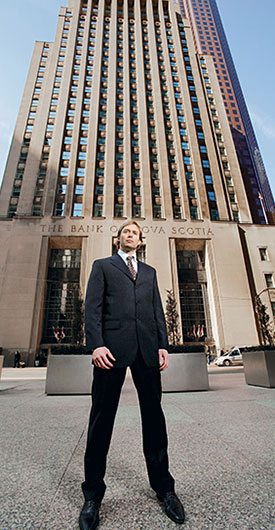
Scotia Capital filed its statement of defence on January 31, 2007. In what was effectively its first public comment on the matter, Scotia called Berry’s lawsuit “an attempt to blame others for his own misconduct, and to seek compensation to which he is not entitled.” The bank claimed that Berry had hidden his behaviour and that his education and training was such that he should have known his “misconduct breached fundamental terms of his employment with Scotia, and was just cause for his termination.” In other words, Berry had put the bank at risk. For good measure, Scotia tacked on a counterclaim, arguing that Berry should pay the bank $4 million—the amount it had announced it would repay clients to correct Berry’s misconduct—along with any other regulatory sanctions and penalties that might be coming Scotia’s way.
In late February of 2007, Scotia agreed to pay a settlement agreement of roughly $570,000 to RS, along with $67,000 in costs. Two days later, Berry’s former assistant, Marc McQuillen, reached a settlement with RS to pay a $25,000 fine. RS also announced that it would hold a hearing to decide if Berry contravened UMIR requirements during more than 50 transactions.
An RS finding either for or against Berry, expected this year, could have a big impact on the civil case. Scotia filed a motion to summarily dismiss their former star trader’s suit, possibly in the hope of delaying Berry’s claim from being heard in court until after the RS decision. As part of this motion, Berry, McQuillen and Cecilia Williams were cross-examined. Williams is Scotia’s lone witness to date, and at press time hers was the only cross-examination filed with the court.
In it, she asserted that it was Berry’s responsibility to train himself about UMIR and to attend monthly compliance meetings (although Scotia did not require him to). Surprisingly, she conceded that none of the trades in question had harmed his clients.
The defining moment of Colson’s cross-examination, though, was an admission by Williams regarding the contentious transfer of shares to Berry’s Preferred Desk. Colson cited the passage in UMIR that exempts the distribution of any previously unissued securities from being entered on the exchange. Williams responded by saying, “The advice we received from counsel—”. Scotia’s lawyer interrupted, preventing Williams from finishing her sentence, explaining that what she was about to say was protected by solicitor-client privilege. But the fact that Williams, herself a lawyer, had sought a legal opinion on Berry’s trades begged a crucial question: if the head of compliance didn’t know whether or not what Berry was doing was improper, how could they expect him to understand?
David Berry has a lot of time on his hands these days. He doesn’t have to rush those lunch-hour squash matches anymore, and he doesn’t miss any of his kids’ soccer games because of work. In the midst of his interviews for this story, his wife whisked him off to Arizona for a week of golf (which he’s just taken up) as a birthday present. To keep busy, Berry recently earned his coaching qualifications for soccer so he can help out his kids’ teams this summer.
He says he’s had numerous job offers from other financial institutions but that they’re all contingent on the outcome of the RS hearing. “I’ve been out of the loop for a long time now. And if that was part of Scotia’s plan, it was pretty ingenious. It will have been three years, as of this June, since I was fired. I’m starting to become stale-dated. It’s not going to be an easy start-up anymore. There’s a lot of stigma attached to me.”
One can only wonder how Scotia’s executives feel these days about their decision to fire Berry. If they thought Berry was easily replaced, they were mistaken. According to some of Berry’s former clients, the Preferred Desk has suffered dramatically without him.
As the David Berry affair nears a conclusion, the bank has already had a sneak preview of a few aces up his sleeve. One is Andrew Cumming, who, until 2002, was Berry’s direct supervisor under Jim Mountain in his role as managing director and head of equity-related products at Scotia, and today is a consultant to a money management firm. Last summer, Cumming swore an affidavit in support of Berry’s lawsuit, claiming that he saw nothing wrong with how Berry was ticketing new issue shares.
Cumming is willing to testify that senior executives at Scotia had divulged the bank’s desire to catch Berry in “something like a securities violation so Scotia could use it against him,” to either severely reduce his compensation package or fire him.
Should Berry obtain a favourable decision from RS, he says that he’ll likely get back into the market, though it’s doubtful he’ll work with a big firm again. And if things don’t go his way with RS? “Well,” says Berry, “then I won’t be back in business. But, hey, I’ll be a heck of a soccer coach.”
Whether he wins or loses, the denizens of Bay Street seem to have already come to at least one conclusion on their own: that Scotia Capital did a lousy job of supervising the most successful trader in its stable. In an industry that’s almost entirely self-regulated, Berry’s case raises questions about how this monitoring is carried out. It seems unrealistic that Berry’s superiors had no idea how he was going about making Scotia $75 million a year.
Berry says he’s spent over $1 million on his claim so far—and he’s not even in court yet. He’ll probably have to spend another million or two to see it through to the end. Much to the bank’s chagrin, it doesn’t look like he’s going to have any problem coming up with the money.



Typical undermining by a large institution and its senior people with their own agendas.