Advertisement

Toronto Life - The Informer

Insider intel on the politics and personalities shaping the city. Sign up for Preview newsletter for weekly updates

Streetcar Named Disaster

1 Comment

Apparently, the Sheppard subway could see a giant chunk of funding come from the private sector

Gordon Chong, the man Rob Ford tapped to create a plan for financing the Sheppard subway, now says the private sector could foot up to 60 per cent of the bill for the mayor’s favourite transit fantasy. Given that Chong’s earlier predictions weren’t quite so rosy, the report’s outlook is surprisingly optimistic, which is good news for the Ford camp. Not so good for Ford, however, is Chong’s suggestion that the city needs to look into revenue sources like parking levies and road tolls (a method for financing the project that Ford previously stated was not on the table) if it’s to begin construction before the end of the current council term. Of course, as OpenFile’s John Michael McGrath points out, none of this is particularly groundbreaking. We always knew taxes could fund subways, and by extension, that taxes could fund the Sheppard extension. Of course, while Ford is fond of saying he was elected with a mandate to build subways, we’re guessing he wouldn’t feel the same way about a mandate to implement new taxes. Read the entire story [Globe and Mail] »
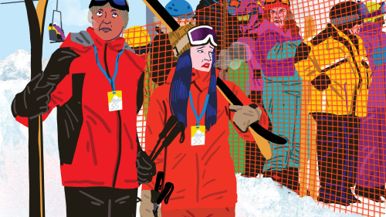

(Images: Rob Ford, Christopher Drost; Yonge-Sheppard subway, gloom)

1 Comment

Comment on this post

  1. Remember Quebec-Gothic development of the 1970′s? That is when developers bought up low and medium density houses north of Bloor Street and High Park to build high-rise (heavy density) buildings. Since heavy density is needed for subways, it seemed the next logically step. However, the residents in the area were opposed. This lead to community associations, reform councillors from the area, and David Miller (who lived in the area).

    For a subway along Sheppard, they need heavy density. The city would get development fees (remember that Mississauga got a lot of revenue from development fees until undeveloped land was or is being used up) and larger sources of property taxes. However, it also means more community involvement as opposition to the high-rises would become apparent. It might not be their house, it could be their neighbour or the ones across the street or the next block that gets converted to high-rises.

    You want subways. Be careful what you wish for. You may not need subways, but may need rapid transit in the form of light rail which only needs medium density to support it.

    February 4, 2012 at 10:02 am | by W. K. Lis

Comment on this post

Neither the author nor Toronto Life necessarily agrees with the comments posted here. Editors will not correct spelling or grammar. Toronto Life reserves the right to edit or delete comments entirely. Read our full policy


Advertisement

Advertisement

Advertisement

Advertisement