Advertisement

Toronto Life - The Informer

Insider intel on the politics and personalities shaping the city. Sign up for Preview newsletter for weekly updates

From the Print Edition

6 Comments

How a chronic insomniac found a radically simple cure for her sleepless nights

I Hate the Night

I was living in a co-op on the edge of Regent Park, next to a playground that was invaded by screeching junkies every night. Everything that year was miserable. My mother had been diagnosed with cancer and was receiving radiation and chemotherapy every day for a month. My dad and two brothers and I juggled our schedules to get her to Sunnybrook Hospital from north Scarborough. When I wasn’t scared I was despondent. Even as I tried to keep up my performance at work (I was an editor at Toronto Life at the time), I wasn’t sure if I wanted the job anymore. Then I got insomnia.

I Hate the NightI didn’t sleep for the entire summer. That can’t be true, but it’s how I remember it. I constantly felt both heavy and weak. My muscles were sore and tense. My shoulders throbbed. Every step seemed to take gargantuan effort. I had chronic gut rot. A mental fog separated me from the rest of the world. There was a noticeable lag between someone speaking to me and my comprehension of their words. I was sure that every time I tried to participate in a conversation, I sounded like an idiot—I once broke down crying at work during a routine discussion about scheduling photo shoots.

My body was so, so tired, but when I lay down, my mind would not shut off. In medical terms, this is known as “hyperarousal”—my metabolism and body temperature were higher than normal, and cortisol raced through me, keeping me awake. I worried constantly about my mom, my job, my relationship, getting everything done, getting it done well, and oh yeah, global warming and world peace. I tossed and turned, had a snack, used the washroom, watched cats and raccoons slink through the streets. Digital clocks would mock me as they marked the crawling passage of time. I roamed the house, covering every eerie neon glow with sections of newspaper. I reread young adult novels (my comfort books of choice) and ran up a huge phone bill calling friends in other time zones. Once, I went to Fran’s 24-hour diner at 4 a.m., only to realize it isn’t a place to eat while sober. Most nights, I just didn’t know what to do. I lay in bed with my eyes open in the dark for endless hours over endless nights.

I gave up coffee, joined meditation groups and yoga classes and attempted innumerable visualization and breathing techniques. I tried natural remedies: melatonin and valerian and 5-HTP, which contains tryptophan, the amino acid in turkey that makes everyone—except me—sleepy. None of it helped, and more often than not I’d find myself in the kitchen in the middle of the night, nursing lonesome tumblers of red wine.

Although I felt alone in my predicament, I wasn’t. Insomnia is more common than alcoholism. According to Statistics Canada, there are 3.3 million insomniacs in Canada. One fellow sufferer told me she has struggled with sleep for over a decade, and doesn’t dare to drive her 16-year-old son to soccer practice. “I feel like I’m risking his life,” she says. Another takes three sleeping pills a night.

My mom’s cancer eventually went into remission, but my insomnia remained. My inability to sleep felt like a personal flaw, as if sleeping were one more thing I sucked at.

Page 1 of 6Next »

6 Comments

Comment on this post

  1. I’m a little surprised that the editors of Toronto Life don’t know that Frankenstein was the name of the brilliant but disturbed DOCTOR who reanimated the dead, and not his creation. To say “Frankenstein brain” is to say, therefore, “misguided genius”, which I’m pretty sure was not the image the author was going for. His creation, moreover, was ALSO a genius, albeit a twisted one, so it doesn’t work either way. It was only Hollywood who decided to make him stupid to simplify the story.

    Otherwise, good article, I’m passing it along to my insomniac friend who desperately needs something beyond the pills her doctor gives her.

    September 15, 2011 at 11:41 am | by Brian
  2. “where a PhD student who seemed eager to use his new prescription pad”

    Is this true? I thought only MD’s have prescription privileges?

    September 15, 2011 at 1:46 pm | by Mark Percy
  3. Kept reading-

    Is the psychiatrist the PhD? Because a psychiatrist is an MD, a psychologist is a PhD. Psychiatrist could prescribe, psychologist couldn’t.

    September 15, 2011 at 1:49 pm | by Mark Percy
  4. Again, reading further-

    Psychologists don’t use anti depressants to treat depression. In fact they don’t use anti-depressants at all, as they can’t prescribe!

    September 15, 2011 at 1:55 pm | by Mark Percy
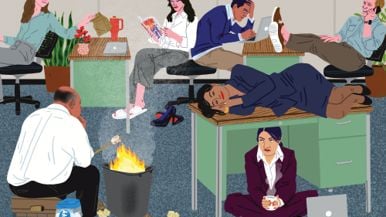
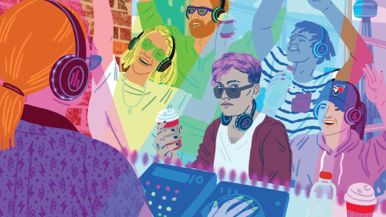
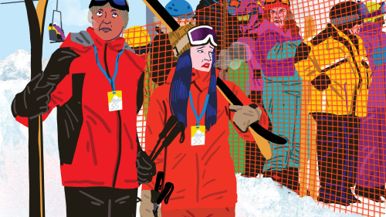
  5. To be honest, the illustration is what got me to read the article. Kudos to the artist.

    October 14, 2011 at 1:10 pm | by Kwil
  6. That is exactly how I feel for 5 years after my first surgery. Now is almost intolerable to sleep for 4 hours or take two sleeping peel and sleep for 6 hours which is still not enough.

    Very well written. Thank you Denise.

    May 14, 2012 at 8:27 am | by Ania Baska

Comment on this post

Neither the author nor Toronto Life necessarily agrees with the comments posted here. Editors will not correct spelling or grammar. Toronto Life reserves the right to edit or delete comments entirely. Read our full policy


Advertisement

Advertisement

Advertisement

Advertisement