Advertisement

Toronto Life - The Informer

Insider intel on the politics and personalities shaping the city. Sign up for Preview newsletter for weekly updates

From the Print Edition

7 Comments

50 Reasons to Love Toronto: No. 33, SickKids is closer to curing autism

No. 33, We’re closer to curing autism

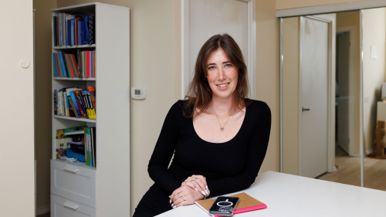
(Image: Derek Shapton)

Autism has been blamed on satanic possession, vaccines and frosty moms, but scientists have known since the 1980s that genetics have something to do with it. What they didn’t know was exactly which genes are involved. Stephen Scherer, the director of the Centre for Applied Genomics at SickKids and co-leader of a multi-million-dollar international study of autism genes, has brought us amazingly close to decoding the complicated disorder.
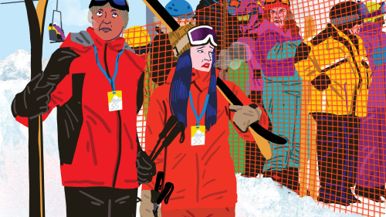

Scherer suspected that the search for a common, autism-causing genetic mutation was pointless; after all, the people afflicted tend not to reproduce. Perhaps, he thought, mutations arise spontaneously. High-resolution genome scanning substantiated his theories: people with autism carry a greater number of variants and also carry their own unique genetic form of the disorder. (“They’re like snowflakes,” says Scherer.) So far, his team has found that a dozen or so susceptibility genes are definitively involved in the development of autism and another 100 or so are showing strong evidence of involvement.

Because of Scherer’s discovery, it may soon be possible to screen children at risk for autism—those whose siblings have already been diagnosed, for instance—long before symptoms arise. With early identification, intervention can begin in infancy, when speech and social therapies can positively affect critical brain development.

When autism was first identified in 1943, it was assumed to be an extremely rare condition. Today, with increased public awareness and improvements in diagnosis, nearly one in 100 kids are thought to have some form of the disorder. Scherer’s discovery will also enable drug manufacturers to target their research at specific neurological processes and hopefully develop drugs for treating autism. The need couldn’t be more urgent.

7 Comments

Comment on this post

  1. Please read your research next time you do something like this….. oh and is SARS still a problem in Canada?

    June 9, 2011 at 3:14 pm | by The American next door
  2. You Americans and your fact checking skills, go back to American Websites you hooter!

    June 9, 2011 at 3:17 pm | by Jonathan Maple
  3. In Soviet Russia, SARS has you!

    June 9, 2011 at 3:19 pm | by Vladimir Mastowski
  4. You morons its about Autism not the other stuff!

    June 9, 2011 at 3:24 pm | by Victor McLear
  5. Good Grief! Please stop publishing info about “CURING AUTISM”…talk about giving the uninformed false hope!

    Let’s talk about the need for:

    - Early diagnosis
    - The development of cutting edge therapy(s)
    - The need for sustainable support services for parents and caregivers
    - The need for constant, loving intervention that will enable these exceptional individuals to reach their full potential (whatever that may be!)
    - Support for Autistic adults
    - Educating the public
    - Acceptance

    Let’s talk about the need for our Cdn. Government to STEP UP and allocate sufficient sustainable funding so that the needs of ALL individuals living with Autism are met!!!

    June 10, 2011 at 11:15 am | by T Milburn - Canada
  6. Does autism necessarily need to be cured?

    http://en.wikipedia.org/wiki/Neurodiversity

    June 12, 2011 at 9:39 am | by Boris
  7. @Boris…clearly you do not have a child with autism.

    June 14, 2011 at 9:09 am | by TdotO

Comment on this post

Neither the author nor Toronto Life necessarily agrees with the comments posted here. Editors will not correct spelling or grammar. Toronto Life reserves the right to edit or delete comments entirely. Read our full policy


Advertisement

Advertisement

Advertisement

Advertisement