Advertisement

Toronto Life - The Informer

Insider intel on the politics and personalities shaping the city. Sign up for Preview newsletter for weekly updates

From the Print Edition

162 Comments

Honour among thieves: the only way to get the best selection of television shows and movies is to steal them

(Image: Andrew B. Myers)

My wife and I have cut the cord. Instead of a cable TV subscription, we have a laptop, which is connected to our flat screen LCD television, which we control while lying in bed with a little remote I bought for $19 at the Apple Store. Through this clunky rig we plow through entire seasons of HBO shows in mere days. We watch new episodes of 30 Rock, minus the ads, on the night they air. When we watch a movie, it’s often a new release, still playing in theatres. Sometimes we watch a movie weeks before it hits theatres. If a friend recommends an obscure old film to me over a beer, I’ll look it up on the spot with my Android. Then, with a touch of my finger, it will be waiting for me at home, in high definition.
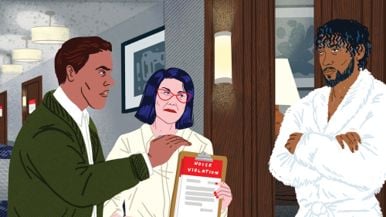
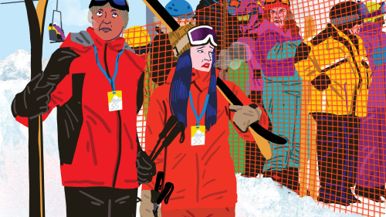
You may consider me to be a pirate who refuses to pay for his entertainment. That would be half-right. I do pirate the things I watch, but I also pay for them. I just pay the wrong people.

Each month, a U.S.-based company called Giganews charges $14.99 to my Visa card. This fee allows me to access something called Usenet (an online network similar to e-mail or Web forums), which sends me video files at blistering download speeds. I used to avoid piracy, mostly because it was inconvenient. Speed and selection were spotty, files would arrive grainy or in low resolution or with Norse dubbing. But the files I get through Giganews are carefully labelled and the selection is vast. I can even subscribe to my favourite shows so they’ll download automatically. The result is nothing short of amazing—a personalized television service that lets me watch exactly what I want at any time I like and on any screen I own. I no longer watch lousy shows just because they happen to be on.

Giganews isn’t exactly illegal, but it isn’t exactly legit either. It relies on the “common carrier” defence, meaning it’s merely the conduit through which users connect to a public archive where anyone can upload or download whatever they want—mostly copyrighted material. One thing I can be sure of: Giganews doesn’t share my money with the people who make the things I watch.

If they did, I’d be willing to pay more. In fact, I’d pay double. Maybe even triple, just so that if I ever met Tina Fey in person, I could look her in the eye with a clear conscience. But no legitimate service offers what Giganews offers—for any price. If I signed up for the best cable TV package Rogers provides, which costs $169.84 a month, I would get access to less content, and I would wait longer to get it—no more watching a movie at home while it’s still in theatres. The only way to get the largest selection, the highest resolution, the fastest downloads and the newest releases is to steal.

Now, if I were living in the U.S., I would have access to legitimate services like the ad-based TV and movie site Hulu, and for-pay services like Amazon Video on Demand, Blockbuster on Demand, iTunes TV rentals, and the original version of Netflix, which offers a healthy selection of shows and movies. Between a Netflix subscription and various rental fees, an American with my viewing habits can sidestep cable, without becoming a criminal, for about $30 a month. But in Canada, all of these video services are “geoblocked”—visitors with Canadian IP addresses are weeded out and denied access. We now have a Canadian version of Netflix, but its library is a poor cousin of the original, with less desirable shows that tend toward the obscure (fans of Animal Planet’s River Monsters are in luck). Canadians are unable to rent TV episodes from iTunes, and instead must “buy” them at three times the price (Americans can watch this week’s Simpsons for 99 cents; we pay $3.49). Our own TV networks offer some streaming video online, but not much, and always through their decidedly lousy and hard-to-navigate Web sites. Again: if we want to have the most current and convenient selection, we have to steal it.

So why can’t we get decent, legitimate Internet-based TV in Canada? The big telecom companies blame the sorry situation on licensing complications. Securing the digital rights for the Canadian market is a slow and costly process, but if we’re patient, they say, Canada will catch up eventually.

The truth is, there is little incentive for Canada’s television industry to get with the times. Canadian broadcasters choose to lag behind, and deliberately sit on the digital rights that are often thrown in by distributors who sell them broadcast rights to movies and TV shows. After all, why should a station like CityTV help Canadians watch 30 Rock on demand via a $7.99 Netflix-like subscription when we could watch it through a $64 cable subscription to Rogers, its parent company? Why not instead shun and starve upstarts like Netflix, or, better yet, actively sabotage them?

Recently, Rogers did just that. Two days after Netflix Canada was announced, Rogers drastically lowered customers’ monthly download caps. A popular plan offering 25 gigabytes of data was cut back to 15 gigs (roughly eight hours of HD video streamed through Netflix). By contrast, the giant American Internet provider Comcast provides 250 gigs under its cheapest plan. So while Netflix may seem a bargain to Canadians at $7.99 a month, if you’re on a 15-gig plan, once you’ve watched four movies you’ll pay $8 or so more per movie in “overage” fees—twice what it might cost you to rent a DVD. This could easily kill Netflix in Canada before it gains a foothold, and scare potential newcomers away from our market permanently. These are the kind of things that happen when your broadcaster and your cable company and your Internet provider are all the same guy. In a word, the problem in Canada is competition—or, more accurately, our lack of it.

Page 1 of 2Next »

162 Comments

Comment on this post

  1. I find it amazing how emotionally charged people get when an author offers a difference of opinion and crystallizes what many people are actually doing in the real world (ie-at your neighbour’s house). In an ideal world, all market participants along the way for delivering content would get an equal share of their efforts. Unfortunately this is not the case and although people cry that ‘its the artists’ who get hurt, the big boys who operate the pipeline in canada are taking the disproportionate share, charging ridiculous fees for a mediocre service. Just stepping outside the country to see what other countries are experiencing gives you a clear picture of that. I agree, something needs to be done to change things.

    Jesse, i applaud your efforts in an excellent article. Your line about ‘A widespread embrace…will respond,’ was spot on. Only a shot to the bottom line to these providers will change things, but the comments i’m seeing from fellow readers leads me to believe that a widespread movement is very far off.

    The article was well supported by some interesting facts and ‘coincidence by Rogers.’ Keep up the good work.

    March 29, 2011 at 8:50 pm | by Jabawoki
  2. Want access to Hulu and other american services like Hulu in Canada? Well if you are already a member of Giganews all you need to do is upgrade to the Diamond account and with the Diamond account you get access to Giganews VyprVPN which when connected you will be assigned a U.S. ip address then you can access Hulu and other services.

    March 30, 2011 at 9:16 am | by Clayton
  3. truley frightened by the comment section as usual – but not by your article -perhaps if people payed a little more attention to what the CRTC is up to they’d have a better idea why this matters so much – by the way do you have a podcast on cbc as well ? – just saw that yesteday – well done downtown -

    March 31, 2011 at 9:31 pm | by rob norton
  4. I love how no one condemning you for stealing is willing to offer anything in the way of a solution for the giant disaster our telco industry has become.

    Over half a million Canadians have agreed that things here are bad, and there’s been no real move to change things. Simply vague lip-service that put things on hold but won’t change the status quo.

    We’ve done more to prevent this situation from worsening than any other Canadian movement in recent history, and haven’t gotten anywhere. What then, oh “holier than thou, completely out of touch with reality” defenders of big telco, would you suggest as a viable recourse at this point?

    April 5, 2011 at 12:38 pm | by Webstravaganza
  5. I’ve done this for nearly 9 years now and my phone is an IP phone setup using VoipMS last year’s phone bill totalled $68.00 USD for the YEAR!

    I use NetFlix, HULU and Internet radio daily. I’ve built my own HD antenna’s for local broadcasts and I refuse to pay $60+/month for “Basic” services. You should be able to get HD channels of your choosing for $15/month. If I could get local HD and On Demand HD service for $30/month I’d be sold.

    If I like a show I usually purchase the BluRay.

    Am I a pirate? Thief? Sure but I’m no different than the 1000′s of smokers buying illegal cigarettes. Or the 1000′s of satellite pirates in the GTA alone.

    I am not making a profit off of this. I do not sell anything to anyone unlike some others at Pacific Mall, or any other Flea Market in the GTA.

    So before you call me a thief look in the mirror and check your house inventory for any of these pirated DVD’s or CD’s.

    April 7, 2011 at 11:09 am | by OhTheMoneyIHaveSaved
  6. I think this article and the comments it has produced illustrates that there are two kinds of pirates out there: the ones that will steal no matter what and those that choose to steal as a form of protest against unfair pricing.

    While the former are out of reach no matter what happens in the marketplace, there are thousands of “pirates” that are savable by providing one simple concept: good service at a fair price. Knowing that it takes a few cents to serve a gig to my house, compared with what i am paying, makes the business relationship with my ISP a complete joke. If you want to charge me based on my usage, that’s fine, but don’t charge me a 2000% markup. Ok fine, i’m not happy about it, so i’ll switch … to who?

    If the government won’t allow foreign companies into the marketplace to keep competition up and prices fair, then the onus is on them to prevent the Canadian consumer from being gouged by the very monopoly they are creating.

    April 12, 2011 at 12:03 pm | by airyt
  7. WOW! Look at all these negative comments.

    Let’s get one thing straight: downloading a movie is not stealing. It’s copying.

    It’s NOT the same as stealing a physical object because no one is out anything. If you steal a candy bar someone is out the resources it took to make the candy bar. If you download a TV show they are out a POTENTIAL sale- one you may never have made otherwsie. That doesn’t make it the right thing to do, but it does turn it from an exclamation of “That’s wrong!” to a “Eh, you really shouldn’t do that.”

    April 15, 2011 at 1:09 pm | by Addison
  8. To the guy who equated this article to skipping out on a restaurant bill: And by your logic, sir, you would be skipping out on that bill because they charged you a hundred bucks for a baked potato. I don’t know about you, but I would definitely be walking out the door if a restaurant charged me a hundred bucks for a baked potato.

    April 19, 2011 at 9:50 pm | by Joanna
  9. You’re a thief. Plain and simple.

    And you’re literally taking food off my table as a television writer.

    You’re paying a company for access to the Usenet but they have no right to share what you view and none of that goes into the pocket of the people who create the shows and movies they share.

    I get the frustration. But you’re hurting people like me as much as the networks, Bells and Rogers of the world.

    It would be more effective to get as many people as possible to cancel their subscriptions in the same month and really make the cable companies sit up and take notice.

    But this isn’t really about doing what’s right, is it? It’s about getting what you want. Now. And for free.

    It’s nice that you’re proud to be a crook and feel justified in stealing. But here’s a thought, every criminal in the world feels “justified”. It doesn’t make what they do right. And it doesn’t make you a modern-day Robin Hood.

    If I remember correctly, Robin Hood actually did a few things for others.

    April 20, 2011 at 8:46 am | by gorillamydreamz
  10. Jesse, I can’t thank you enough for publicly voicing our national discontent with CND telcos and Toronto Life for supporting the article’s publication. Judging by the responses here and elsewhere that it triggered, it served as a rightful platform for discourse on an imperative Canadian public issue and thus served us well.

    May 19, 2011 at 7:16 pm | by InMyView...
  11. Bravo Jesse, read this the other day and I’m glad someone has the platform and guts to say what so many of us are complaining about.

    As a personal example I have spent tens of thousands of dollars on music over the past 3 decades, and I lawfully and happily would buy these CDs to support music I loved. Apparently I am a bad person though because I would make unlawful mixes for my friends, but who would then in turn go out and buy these CDs themselves. I was doing a huge grassroots advertising campaign for musicians and record companies. Maybe I should ask where is my cut? On a more serious note, when I would in turn bring my lawfully purchased CDs to work to play in a small proprietor run store, people would always stop me and ask what was playing so they could go and buy the CD. Ironically, 3 years after doing this the business was fined by Neighbouring Rights Collective of Canada (now called Re: Sound) back pay tariff -past even the time we had been playing music even! The pay was based on square footage and was to compensate musicians….they have no idea what music was played, despite the fact that I brought in lots of music that was no longer available commercially and was from other countries and never issued in this country. This is a huge insult to those musicians who would never see this money and our musicians would be compensated for their work outside of our country?! The local groups I would play got the general public hearing them and I know sold lots of CDs as a result, because they were smaller unknowns or not huge commercial bands. So we stopped playing music. Congratulations, Re: Sound, we couldn’t possibly afford your rates, and now fewer artists are being heard and having their work purchased. Is that working for your constituents?

    Another question is that for many of these artists who are dead, how long do rights deserve to last for greedy record companies or the families. Patents were meant to only last a set period (see LEGO, and why many other companies can make their own version of LEGO now). LEGO, for example moved on, and has, in fact, prospered with new business models and product. I’m a visual artist, and even I don’t get money each time my work might be resold (see droit de suite in France and some of Europe). Frankly this is when I really started to question buying music at all, and paying overly inflated prices for CDs, most of which I found out didn’t go to artists. Obviously a lot of other people did too, along with a changing technology to challenge the pricing/cost model as well as distribution.

    My above comments are just about music and not the rest of the entertainment sphere (TV and Movies). To address the greater issue of television/movies/music, it is obvious that in Canada our Telcos have an oligopoly over all media. This is bad for consumers and for the economy. The CRTC is a horrible impeding dinosaur that needs, as many have commented, to be rethought. Too many decisions are being made without much forethought of where the future is going or how our world is changing. This is what has killed the CD ultimately and some music companies.

    I hope more people read this article, and that government, CRTC, and these companies (not likely) take heed and realize that people will pay money for these goods, but that the pricing is just not justifiable any longer with the new distribution models and copyrights that seem to go on forever restricting our ability to move on and create anew.

    May 27, 2011 at 2:13 pm | by Madashellnotgoingtotakeitanymore
  12. Why the big hang-up with US shows? There is so much online content for free (legally) that no-one should be short of something worth watching-ever. Check out webtvguide.ca and tell me you can’t find something worth watching. This is all free stuff some with little or no advertising.

    February 16, 2012 at 9:13 am | by Chris

Comment on this post

Neither the author nor Toronto Life necessarily agrees with the comments posted here. Editors will not correct spelling or grammar. Toronto Life reserves the right to edit or delete comments entirely. Read our full policy


Advertisement

Advertisement

Advertisement

Advertisement