Advertisement

All stories by Jan Wong

The Informer

Columns

Comments

Jan Wong: The province’s shrewd but savage strategy to stick it to Ontario’s teachers

By Jan Wong | Photo Illustration by Bradley Reinhardt

Jan Wong: Strike Out

(Photographs: Demonstrators by Aaron Vincent; Kathleen Wynne by CP Images)

The school year is coming to a close, and not a moment too soon. It’s been an ugly one. Queen’s Park forced new labour contracts onto Ontario’s teacher unions. Teachers fought back by scrubbing extracurriculars for the better part of the year. And many tax-paying parents are incensed that their kids got shafted in the bargain.

Read the rest of this entry »

The Informer

Features

83 Comments

Jan Wong: Why it’s time to talk about the elephant in the classroom—the Catholic school system

Most Torontonians think the Catholic school system is antiquated, expensive and unfair. So why don’t politicians want to talk about it?

Jan Wong: The Elephant in the Classroom

(Image: Getty Images)

As Christopher Hitchens so memorably noted, “god is not great.” Please allow me to add that god is especially not great when it comes to taxpayer-funded Catholic schools.

Ontario remains the sole Canadian province that still fully funds Catholic education while not providing a cent to any other faith-based schools. About 660,000 Ontario students—one third of all students attending taxpayer-funded schools—are in the Catholic system. In Toronto alone, 92,000 are enrolled in 200 schools. Funding any religious school in a pluralistic and secular society is anachronistic, but it is especially appalling when a school’s teachings come into conflict with societal norms—as was the case earlier this year when the Catholic board refused to allow its students to use the term “gay-straight alliance.”

Politicians say that a constitutional brick wall has stymied us from dismantling the separate system. As Laurel Broten, the education minister, reiterated in May, Catholic education is “constitutionally protected.” News flash: a deal is not always a deal, and walls that men build can always be dismantled. Especially one that financially weakens our public schools by $7 billion a year, fights an inclusive student environment and discriminates against unemployed teachers, be they Jewish, Muslim, Protestant, Buddhist, Baha’i, lapsed Catholic or garden-variety atheist.

Read the rest of this entry »

The Informer

Features

9 Comments

Jan Wong: the simmering class war over basement apartments in Brampton

The Urbanization of the Burbs

(Image: Getty Images)

I once moved into an illegal basement apartment in Toronto for a newspaper series about working undercover as a maid. At $750 a month, it was the most affordable roach-free dwelling I could find. What’s more, it helped my landlord, himself a cleaner at the Four Seasons, pay his mortgage. Secondary suites are mutually beneficial for renters and homeowners. So I applaud the controversial new legislation that has finally legalized the subterranean world of basement apartments. The province-wide law, which took effect in January, overrides any municipal bylaws prohibiting them—bylaws that were typically passed due to residents’ complaints about traffic congestion, overcrowded schools and, though less often vocalized, there-goes-the-neighbourhood fears.

Read the rest of this entry »

The Informer

Features

Comments

Memoir: Jan Wong’s search for the right antidepressant

Memoir: Pills ApplentyEven with sedatives, I couldn’t sleep. I kept losing weight. I was crying every day. One night, I lost my temper with my son Ben, then 16, because I wanted his attention and he wouldn’t get off the phone with his girlfriend. Blind with rage, I grabbed his most precious possession—his laptop—and tried to throw it out the bedroom window. My 13-year-old, Sam, wrestled me in a bear hug and made me stop.

For months, I had been clinically depressed. Like something out of an Ian McEwan novel, a single incident had destroyed the clean plot lines of my life. A story I’d written for my employer, the Globe and Mail, on a school shooting in Montreal had sparked a nasty backlash. The Globe failed to stand behind me, and when I fell ill, the paper and its insurer ruled I wasn’t sick.

Read the rest of this entry »

The Informer

Features

64 Comments

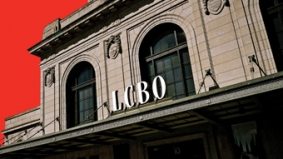
Jan Wong: Why the LCBO—the antiquated, paternalistic monopoly that’s deliberately gouging us—has got to go


Body Politics

On a recent Sunday afternoon, I stopped by the LCBO’s flagship Summerhill store.
A glorious 35,000 square feet of creamy Italian porcelain floors and sparkling lights, the refurbished Canadian Pacific Railway station is adjacent to a cluster of gourmet shops that affluent shoppers call “The Five Thieves.” Here you pay dearly for ready-to-heat osso buco or a square of chocolate cake sprinkled with edible gold leaf. Despite its prime location, this outlet, the LCBO’s largest, is no pricier than any other location in the province. You pay the same fixed $12.60 for a 2009 Louis Bernard Côtes du Rhône here as you would at Scarborough’s lowly Cedarbrae Mall.

Nice, huh? But wait—you and I are paying for those pot lights, the Martha Stewart–style test kitchen (used for cooking demos and wine appreciation classes) and the standalone tasting bar, not to mention the lease on this prime piece of real estate. We all pay—whether we’re teetotalers or boozehounds—because higher overhead reduces the annual dividend the LCBO remits to the province. That in turn means less money for everything from social services to infrastructure.

Read the rest of this entry »

The Informer

Features

10 Comments

Jan Wong: Why aren’t schools teaching kids about the pleasures and perils of sex?

Body Politics

The answer is simple: our curriculum is shamefully outdated, and the Liberals are too scared to fix it

Adam and Eve nibble an apple from the Tree of Knowledge and suddenly realize they’re both naked. Unfortunately, sex ed isn’t part of God’s plan, and He evicts them from the Garden of Eden. These days, some folks in Toronto are acting quite God-like themselves, insisting that the next generation live in innocence and ignorance. Heaven forbid our youth get to know themselves in the Biblical sense.

Our public schools are under attack by an evangelical Christian organization called the Institute for Canadian Values, whose leaders believe, as a basic ideological tenet, that teaching up-to-date sex education in schools will corrupt and confuse our children. The institute is run by a man named Charles McVety, who is quite skilled at getting media attention. Shamefully, most journalists have checked their brains at the door, blandly covering the institute’s actions and claims without questioning their legitimacy or standing up against the influence of the church on the state.

Read the rest of this entry »

The Informer

Features

25 Comments

Jan Wong: how the rise of horticultural training at Toronto schools is bad for students

While we’re busy teaching our kids to tend school gardens, they’re failing provincial tests in reading, writing and math. The folly of the new enviro-propaganda

The Horticultural Revolution

(Illustration: Tavis Coburn)

This fall, hundreds of Toronto students are harvesting beets and zucchini from their school gardens. I say: nice photo op, bad idea. The argument for school gardens assumes that by grubbing in the dirt, kids will learn to love eating vegetables. They won’t think chickens hatch into this world as deep-fried nuggets. And they’ll develop a respect for nature.

Here’s the counter-argument: our students shouldn’t be out scrabbling in the hot sun when one in five can’t pass the Grade 10 literacy test administered by the provincially funded Education Quality and Accountability Office. And while Canadian students score high internationally in reading, mathematics and the sciences, Statistics Canada says our relative ranking is declining due to improved performance by other countries. In this era of global competition, we can’t afford to let other nations nip at our heels.

Half of Toronto’s population was born outside Canada, and it’s a safe bet many of them came here for a better life, including a good education for their offspring. A lot of immigrants originate from agrarian regions of countries such as India, Pakistan, China and the Philippines. The last thing these newcomers need is a morality crusade about carrots. Yet more than 200 of Toronto’s nearly 600 public schools now have gardens, and an army of well-meaning parents, volunteers, activists and advocacy organizations with a social agenda is successfully lobbying for more.

Read the rest of this entry »

The Informer

Features

4 Comments

How academic pressure may have contributed to the spate of suicides at Queen’s University

Jack Windeler

Jack Windeler was 18 years old and in his first year of university when he died. (Image: courtesy of the Jack Foundation)

Early one Saturday morning in March 2010, Eric Windeler and his wife, Sandra Hanington, arrived home after a spinning class at the Granite Club to find an urgent message from the police. They called back, and the police said they’d be right over. Windeler and his wife quickly took inventory: grandparents fine, two of their three children safely at home. Only the eldest, 18-year-old Jack, was unaccounted for, away at Queen’s University in Kingston. “We texted him and called him. There was no answer.”

Then a police officer was at their door. “I’ve got terrible news,” he said. “Your son has died…We think it was suicide.” The couple called their other kids into the room and told them what happened. Then the four of them collapsed in a tangled heap in a single chair.

Jack Windeler’s was the first of a string of deaths at Queen’s. In the ensuing 14 months, five more students would die, three by suicide, two by what the cops call misadventure (likely alcohol related). Queen’s, widely considered one of the best universities in the country, is a popular destination for students in the top five per cent of their graduating class. The entrance grade average in 2008 was 87.3 per cent. These were kids who seemed headed for success, which made their deaths all the more shocking.

Read the rest of this entry »

The Informer

Features

7 Comments

How to treat the scourge of modern medicine—bad bedside manner

Illustration by Florian Bayer

When I was pregnant and working as a foreign correspondent in Beijing, my obstetrician suggested an amniocentesis test for Down’s syndrome. Afterwards, I was told to call in three weeks for the results, by which time I could already feel the baby’s first kicks. “There’s a problem,” the nurse said when I phoned, adding that the doctor was out. She advised me to call back in an hour. I hung up the phone and burst into tears. Worst-case scenarios overwhelmed me. Did “a problem” mean I’d have to terminate the pregnancy? Did it mean this, my first pregnancy, would be my last?

One hour later, I dried my eyes and phoned back. “Everything’s fine,” my doctor said. I was too relieved to complain about the nurse. Eventually it dawned on me that all she had meant by “problem” was that the doctor was out.

Read the rest of this entry »

The Informer

Features

15 Comments

Is a Toronto woman’s right to testify in a niqab an unreasonable accomodation?

A case involving a Toronto woman’s right to testify in a niqab is now headed for the Supreme Court. Maybe it’s time to acknowledge that some accommodations are just plain unreasonable

Veiled Threat

(Image: Jillian Tamaki)

Naiyra Fatah smiles when she recalls the year she first started wearing a burka, the Islamic garment that’s the sartorial equivalent of a tent. She was 13, and she loved cracking up her stepsister, then 15, as they walked to Lady McLaughlin Girls High School in Lahore.

It wasn’t easy clowning around when neither sister could see the other’s face. “So I would suck the fabric in through my mouth,” recalls Fatah, who is now 84. “My sister would always laugh so hard she would drop to the sidewalk.” Seeing my puzzled look, the elderly woman tosses a filmy floral scarf over her head and demonstrates. The effect is hilarious: a flowery ghost with a mouth that resembles the wrong end of the alimentary canal.

Read the rest of this entry »

The Informer

Features

23 Comments

Why educational apartheid is not the answer to curbing dropout rates for specific racial and ethnic groups

Students stand in segregated lines at a school entrance

(Illustration: Taylor Callery)

The tall black man was angry. “I want to propose 10 seconds of silence in memory of Brother Dudley Laws,” he said into the microphone, his voice booming through the auditorium at Oakwood Collegiate. It was question period at a raucous, emotionally raw public meeting in March, called after news leaked that the Toronto District School Board had recommended embedding the city’s first Africentric high school inside Oakwood. Parents, students, teachers, alumni and neighbours had filled every creaky, green-leatherette flip-up seat.

Laws, the civil rights activist, had died the week before. The man hoping to commemorate him applauded his own suggestion, smacking hands the size of baseball mitts together, before returning to his seat. I half hoped that Karen Falconer, the school board superintendent who was chairing the meeting, would rule him out of order. But Falconer immediately rose to her feet and announced a moment of silence.

It was like a scene from the American pre–civil rights era of the 1950s and ’60s, except that this time the tables were turned: angry blacks demanding segregation before a shell-shocked mixed-race community, while uniformed cops kept wary watch.

Read the rest of this entry »

The Informer

Features

43 Comments

Welcome to Toronto the Rude

We swear at each other from cars, bark at each other on the TTC and yell into our cellphones. How a supposedly livable city suddenly turned boorish

Torontonians cursing each other in a traffic jam, illustration

(Illustration by Kagan McLeod)

I got into a cat fight the other day at the Bolshoi ballet, one of those live satellite transmissions at my local Cineplex, where people arrive an hour early to get a good seat. The orchestra in Moscow hadn’t yet begun warming up when one balletomane barked at me for sitting in her territory, a 10-seat swath ambiguously marked with scattered scarves and hats. “You can’t sit there,” she said, with surprising nastiness. When I chose a seat farther down the row, she snapped, “That’s taken, too.” Steaming, I moved to a third spot and plunked my bag down on the seat beside me, not to save it for anyone, but to ensure zero human contact after being bullied by Lady Ten-Seat.

Rudeness is contagious. When another woman arrived a minute later and needed two seats, I set my jaw. “You’re not going to move your bag?” she asked, incredulous. “Nope,” I replied. We exchanged sharp words. “I’m tired of being pushed around by your friend,” I finally hissed, nodding at Lady Ten-Seat. It turned out not only did they not know one another, but my newfound adversary had just received the same rude treatment. “Now I’m totally edgy, too,” she confessed, suddenly extending her hand. “I’m Jane. Let’s be friends.” Mortified, I shook her hand, apologized and moved my coat. Then we all settled in to watch Giselle.

I wish such hostile encounters were rare, but it’s hard to navigate the city these days without experiencing friction. At least that’s my observation. Perhaps I’m just a magnet for trouble. Perhaps you, on the other hand, float through winter with people politely stepping into snowbanks to let you pass; perhaps you’ve never been held captive to a cellphone user’s inane conversation on a streetcar. But I say civility is on the decline, and the evidence is everywhere.

Read the rest of this entry »

The Informer

Features

23 Comments

For sale by owner: realtors are still trying to keep the public’s hands off MLS, but you can’t hoard information in the information age

(Image: Brian Rea)

I’m not a do-it-yourself type. The one time I wallpapered my basement, I ended up with a stiff neck, peeling corners and a marital spat. Nevertheless, if I had to sell my house tomorrow, I’d be tempted to do it myself.

The main incentive for selling your own home is, of course, to avoid paying the real estate agent’s fees, which can be enormous, usually amounting to five per cent of the value of your biggest asset. A DIY seller of a $431,000 house (the average house price in Toronto in 2010) would save $24,350 (including HST). You could buy a new car for that. Even if your buyer uses an agent, which most buyers do, and you’re on the hook to pay a 2.5 per cent commission, you’d still save more than 10 grand. In the same dramatic way consumers dumped travel agents to buy cruises, hotels and plane tickets over the Internet, I expect that we will soon be rethinking the way we use real estate agents, if we use them at all.

Read the rest of this entry »

The Informer

Features

22 Comments

Not Asian enough: Jan Wong on the phenomenon of “Tiger Mom” parenting

The furor over Tiger Mom parenting ignores one awkward fact: academic success doesn’t guarantee a sparkling future. Confessions of a delinquent mother

(Image: Peter Arkle)

I freely admit that I’m a bad Chinese mom. I do not whack my sons with chopsticks; neither of them speaks Chinese; and a couple of years ago, I was thrilled when one of them doubled his math mark (at summer school—don’t ask). Which is why I’m bemused by all the angst, outrage and uproar over super-achieving Asian kids and their Genghis Moms.

Culture and competition make for a volatile mix, especially in Toronto, where we come from every part of the world, and especially during uncertain economic times, when people are worried about job security and who’s outperforming whom. It’s at moments like these that politicians and the media, consciously or unconsciously, tend to exploit the West’s simmering insecurities about The Other. They hint, for instance, that we are losing ground to China and even to our own Chinese-Canadian population.

Read the rest of this entry »

The Informer

Features

13 Comments

The woman behind the mayor: who is Renata Ford?

For a political wife, Renata Ford is an enigma—neither humanizing homemaker nor independent careerist. So who is she?

(Image: André Carrilho)

Renata Ford is the invisible wife. Most Torontonians caught their first glimpse of her on election night: a smiling, slender blonde, wearing a jacket constructed of leathery gold leaves and standing one step back from her triumphant husband. Immediately afterward, she disappeared from public view. Today Renata remains an enigma, the first mayoral spouse about whom almost nothing is known, including her age, background and occupation.

In Canada, the media generally regard political spouses as off limits. They are, after all, unelected and unpaid. Nowadays, as women out-earn their husbands, head up political parties and dominate graduate-school enrolment, there is less of an obligation or even an expectation for a political wife to play a public spousal role. David Miller’s wife, Jill Arthur, declined, but at least we knew she was a lawyer at the Ontario Court of Appeal.

Read the rest of this entry »

Advertisement

Advertisement

Advertisement

Advertisement